


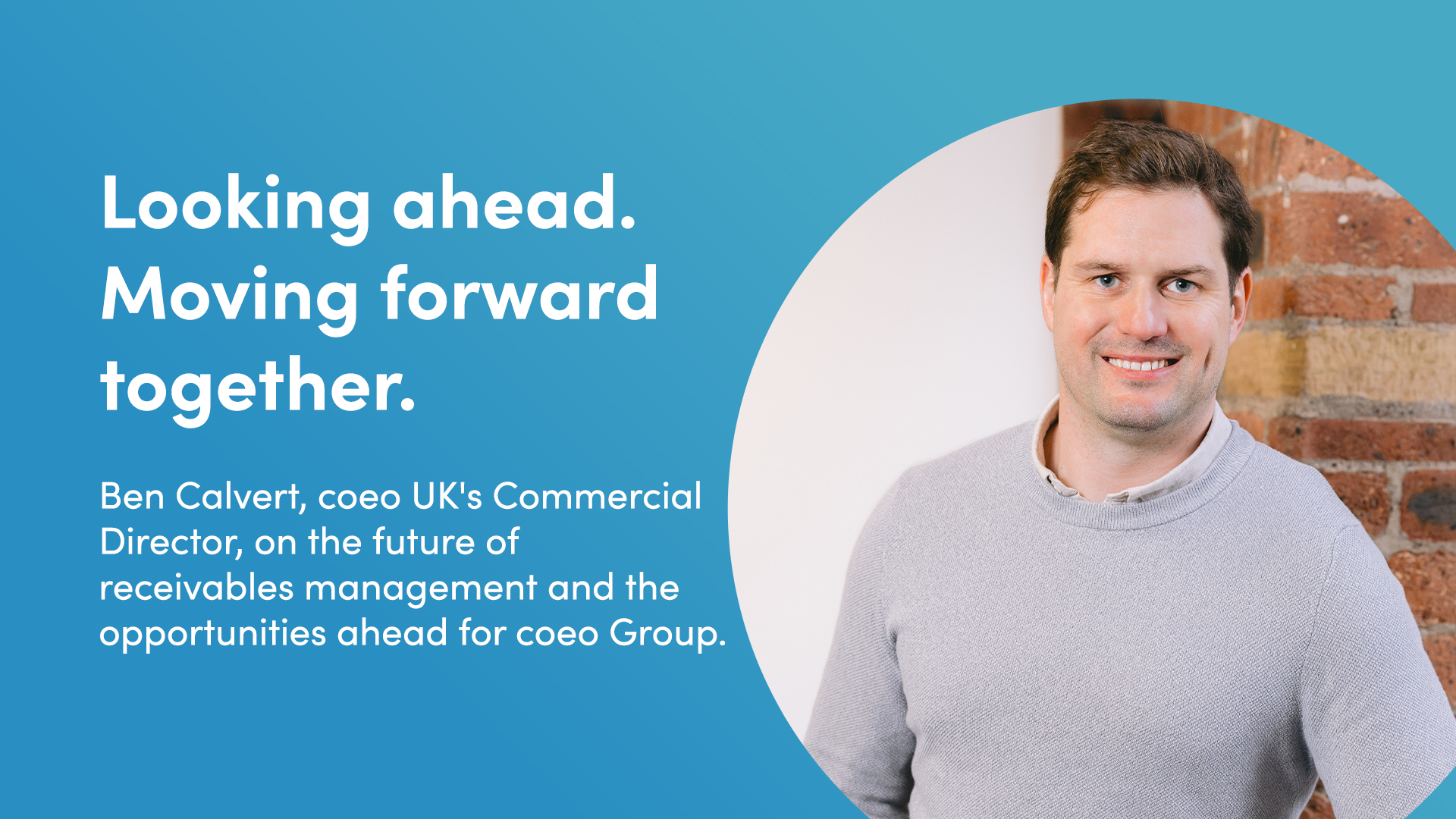
Ben Calvert, Commercial Director at coeo UK, shares his outlook on the changing industry, evolving client expectations and the opportunities created through international collaboration.
The receivables management industry is entering a period of significant change. Advances in artificial intelligence, rising expectations around customer experience and continued economic pressures are reshaping both the challenges and opportunities facing collections businesses.
For clients, these developments are changing what they need from their collections partners. Consistency, actionable insight and the ability to respond quickly to emerging challenges are becoming increasingly important, alongside the human expertise and strong relationships that underpin successful partnerships.
As coeo Group continues to strengthen collaboration across its European businesses, sharing knowledge and best practice between markets presents further opportunities to innovate and improve.
We asked Ben Calvert, Commercial Director at coeo UK, for his perspective on the forces shaping the industry’s future, how client expectations are evolving and what gives him confidence as we look towards 2027.
As we approach 2027, what do you see as the biggest changes shaping the receivables management industry?
I think the biggest changes are also our biggest opportunities. If I had to pick three, they would be AI, customer engagement and the wider economic environment.
- Firstly, AI. Agentic AI in particular will be a game changer for the collections industry. Just imagine a case entering collections, being automatically segmented, receiving personalised communications, with another AI agent managing the inbound response and another auditing the interaction. We’re not far away from a world where much of the collections process can be fully automated, with human oversight where it’s needed.
- Secondly, customer engagement. We need to consider how customers expect to interact with financial services businesses in 2027. Fintechs have changed the game in terms of instant access to accounts, real-time information and convenience. They’ve also raised expectations around communication, from more engaging, visual outbound messages to simple, frictionless inbound journeys. Collections needs to keep pace with those expectations.
- Thirdly, the economic environment, particularly in the UK. The cumulative impact of higher borrowing costs, cost-of-living pressures, frozen tax thresholds and pressure on disposable income is significant. Customers have less money available, with essential day-to-day spending increasingly taking priority. That creates challenges for the industry, but also reinforces the importance of understanding affordability and offering flexible, appropriate solutions.
How are client expectations evolving, and what are businesses increasingly looking for from their collections partners?
Number one is consistency. Clients want consistency in processes, service and, ultimately, results. I think this will become even more important as customers increasingly expect real-time information, immediate support and seamless interactions, particularly where service restrictions or account-related decisions are involved.
Secondly, regulatory insight and added value. I’m not talking about simply meeting the regulatory standards required to operate, that’s a given. It’s about the additional value we can provide through the insight gained from the portfolios we manage.
We’ve invested a lot of time in developing our MI and performance reporting so that we can proactively identify trends and opportunities for improvement. That might mean highlighting where earlier customer engagement could improve outcomes, or identifying where changes to a creditor’s upstream processes or decision-making could make a difference.
For me, it’s about going beyond collections performance and using what we learn to help clients improve their wider customer journeys and outcomes.
How important is the combination of technology, human expertise and strong relationships in meeting these expectations?
Massively important. I see it as a continuous improvement cycle. Technology improves, customer expectations increase, and the standard of service has to improve with them. We’re effectively moving into a new way of operating.
My view is that people and technology should work symbiotically, not in competition. Technology allows us to automate processes, improve consistency and make better use of data, while people bring judgement, experience and the ability to build relationships.
Strong relationships are what bring those elements together. Understanding what clients are trying to achieve, challenging each other constructively and continuously improving the service. I don’t think any one of those elements works as effectively in isolation.
What advantages does being part of an international group bring when responding to new commercial opportunities?
There’s an obvious commercial advantage in being able to support international clients across multiple markets through a joined-up approach. But, for me, the bigger opportunity is the ability to share knowledge and develop best practice.
There’s an interesting principle behind the federal structure of the United States: individual states can take different approaches, learn from what works and ultimately influence wider best practice. I see something similar in the discussions we have across the coeo Group.
Whether we’re talking about technology, collection strategies, economies of scale, regulation, pricing or fraud prevention, we have different markets approaching similar challenges in different ways.
That gives us a huge opportunity to learn from each other, take the best ideas and apply them locally. It’s a real competitive advantage, particularly when the pace of change is so significant.
What are you most optimistic about for coeo UK and the wider group in 2027?
I think our culture is what gives me the most confidence. The people I work with in the UK and my peers across Europe share a similar mindset. We’re interested, curious, commercially minded and willing to challenge how things have always been done.
We work quickly, pay attention to detail where it matters and, importantly, we’re nimble enough to turn ideas into new products and services without unnecessary complexity.
I think that culture breeds success. With so much change taking place across financial services, particularly around technology and customer expectations, our ability to adapt and move quickly puts us in a really strong position.
That’s what makes 2027 such an exciting prospect for coeo UK and the wider group.
A Shared Outlook for the Future
The common thread throughout Ben’s outlook is the importance of adaptability.
Technology will continue to create new possibilities, but real progress also depends on understanding changing customer needs, delivering consistent service and maintaining strong client relationships.
Across coeo Group, collaboration between businesses adds another dimension to that opportunity. Different markets bring different experiences and perspectives, creating an environment where successful approaches can be shared, challenged and adapted to meet local needs.
As 2027 approaches, it’s this combination of innovation, human expertise and collective ambition that Ben believes will help coeo respond to change and create new opportunities across the Group.